by Sudhirahluwalia, Inc | Jan 29, 2016 | Food and Nutrition
Cuminum cyminum, or cumin, is an annual herb of the parsley family. It rarely grows higher than one meter and bears flowers in umbels. It is native to India, the Mediterranean, Europe, Iran, and regions of Asia and Africa. It is an introduced species in Mexico, Latin...
by Sudhirahluwalia, Inc | Jan 13, 2016 | Food and Nutrition
According to the McCormick Science Institute papers, the most significant role of herbs was in healing, followed by food. Numerous references to the high cost of imported spices, especially those from outside the Mediterranean region, appear in Greek, Roman, Egyptian,...
by Sudhirahluwalia, Inc | Dec 10, 2015 | Food and Nutrition
The date palm history is truly ancient Date palm (Phoenix dactylifera L.) is a high-energy crop and one of the most nutritious fruits in the tropics and subtropics. Date palm is rich in sugars; palmitic and organic acids; linoleic, lauric, myristic, and other fatty...
by Sudhirahluwalia, Inc | Nov 23, 2015 | Food and Nutrition
The spice trade spanned all five major civilizations from the 4th to the 1st millennium BC the Indus Valley Civilization in India, the Sumerians in modern Iraq, the Egyptians, the Greeks on the isle of Crete, and the Chinese in the land north of the Himalayas. The use...
by Sudhirahluwalia, Inc | Nov 2, 2015 | Food and Nutrition
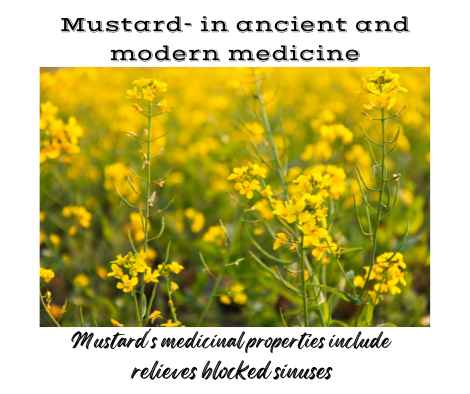
Mustard – In ancient and modern medicine There are three species of mustard consumed by humans. White mustard (Brassica alba) is the mildest of the three. The other two species are Brassica juncea and Brassica nigra. Another species, Brassica campestris,...
by Sudhirahluwalia, Inc | Oct 26, 2015 | Food and Nutrition
Brassica alba (white mustard) is the mildest of the three popular mustard types – white, yellow and black consumed today. The plant is a native to the Mediterranean region and Crimea. It is an introduced species in Europe, Asia, the Americas and the Australian...
